Does it matter who is proposing an EU carbon tax?

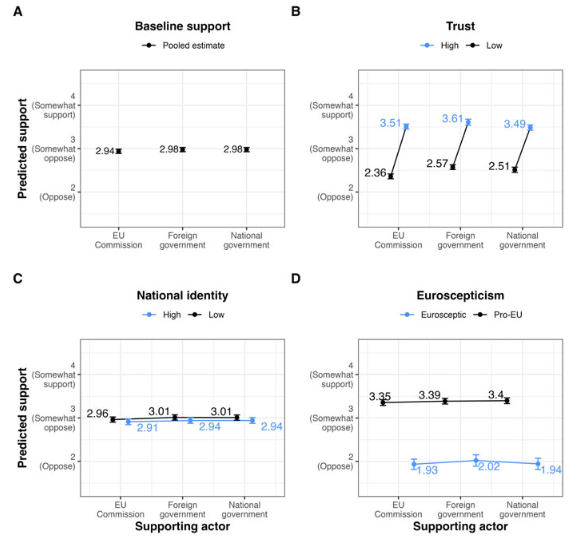
Our paper “Attitudes towards carbon taxation in the EU: messenger effects vs. content effects” was just published (open access) in the Journal of Public Policy (link). Using a pre-registered vignette experiment in Germany and Poland (n=3,192), we test how support for EU carbon taxes shifts when identical proposals are attributed to the European Commission, the national government, or a foreign government. Higher tax rates reduce support, especially among those most directly affected. Trust in the promoting institution raises baseline support across the board, but we find no evidence that national identity or euroscepticism triggers actor-specific backlash: eurosceptic and nationally conservative citizens oppose EU-wide carbon taxes regardless of who is proposing them. Trust lifts baseline support, but does not shield policies from cost sensitivity. Led by Alessio Levis, with Silvia Pianta, from our part of the Horizon EU CAPABLE project.
Where do we not know what people think about air pollution?

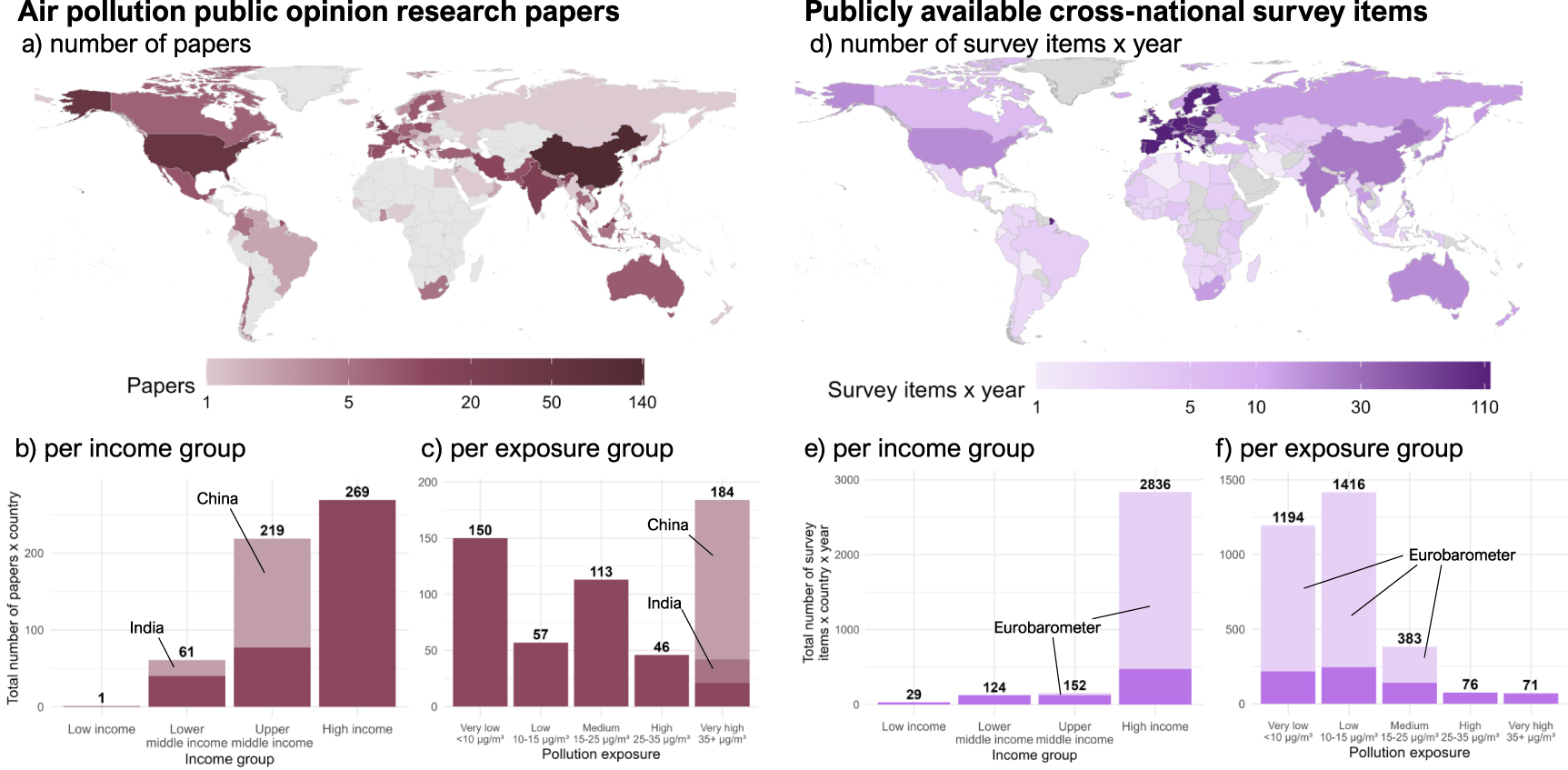
Our paper “Global blind spots in air pollution public opinion: an LLM-assisted mapping of research coverage and survey availability” was just published in Environmental Research Letters (open access). We use an LLM-assisted mapping approach to identify where in the world we have — and, more importantly, do not have — evidence on public perceptions of air pollution and demand for mitigation. Coverage is highly uneven, with substantial blind spots in exactly the regions where pollution exposure is highest. Led by Ella Henninger, with Camille Fournier de Lauriere, Andina Nabilla and Raeesa Moolla, and connected to our broader SNIS project on politically feasible air-quality policy.

Strong demand for clean air policies in Majority World cities

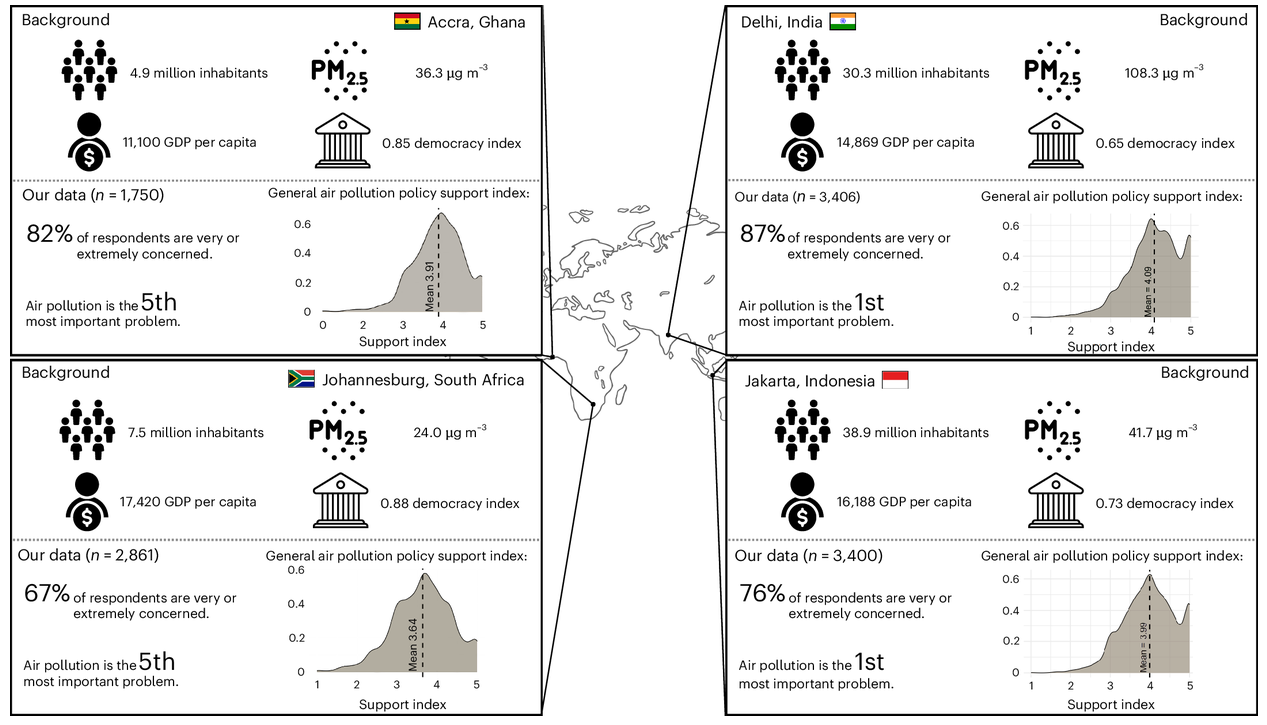
Our new paper is out in Nature Cities (link). Air pollution is a leading health risk in many emerging markets and developing economies, but it has been unclear whether residents actually demand mitigation, or whether they see poor air quality as a necessary price of development. We surveyed 11,417 adults in four severely polluted cities — Accra, Delhi, Jakarta and Johannesburg — and find that clean air is a top priority, with majorities backing six different mitigation policies, including cost-salient measures such as stricter industrial limits, expanded household electrification, and improved public transport. Concern, trust, and low behavioural control are the strongest predictors of support. People see air pollution, feel its effects, and want governments to act, even when action carries economic costs. The findings are also summarised in an accompanying policy brief in the same issue. This is from our SNIS-funded project on politically feasible clean-air policy, together with Ella Henninger, Camille Fournier de Lauriere, Vally Koubi, Raeesa Moolla, Liam Beiser-McGrath and Thomas Bernauer.

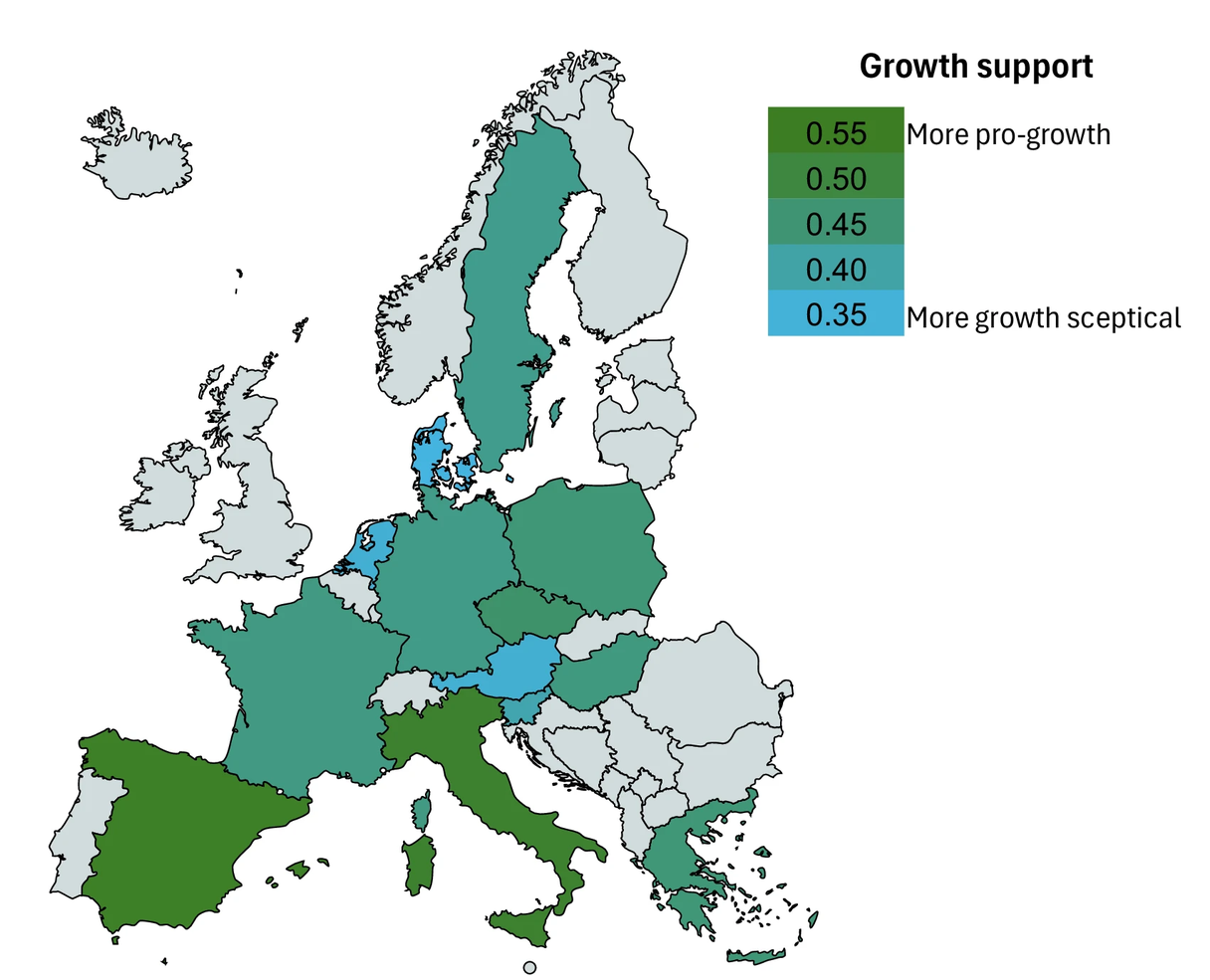
Most Europeans still see economic growth as essential for a sustainable future

Debates about post-growth and degrowth have become increasingly prominent in academic and policy circles, but it has been unclear how widely these views are held by the public. Our new paper in Nature Communications surveys 16,781 people across 13 EU countries and finds that nearly 60% of citizens hold pro-growth views, seeing economic growth as essential for environmental protection, public services, stability and life satisfaction. A third are indifferent, and fewer than 10% hold clearly growth-sceptical views. Notably, pro-growth citizens are no less concerned about climate change or less supportive of climate action than growth-sceptics. Led by Ivan Savin, with Lewis King, Jeroen van den Bergh, Thijs Bouman and Milan Ščasný, and part of the Horizon EU CAPABLE project.
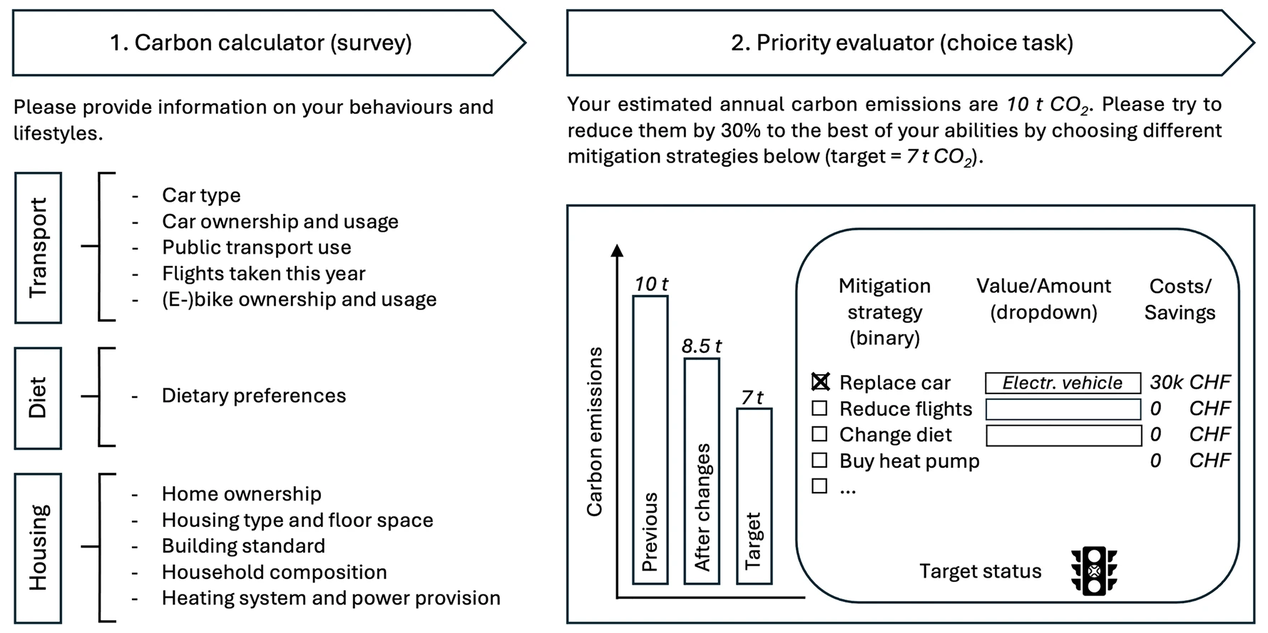
Personalised climate mitigation plans highlight cost, lifestyle constraints, and inequality

Our new paper in npj Climate Action uses a “personalised scenario testing” tool to examine what people actually choose when asked to reduce their own emissions by 30% (Swiss sample, n=2,793). We find that people gravitate toward options that are inexpensive and require fewer lifestyle changes. A key distributional result is that uptake of high-impact but expensive technologies is strongly income-dependent, underscoring the importance of making these options financially accessible.

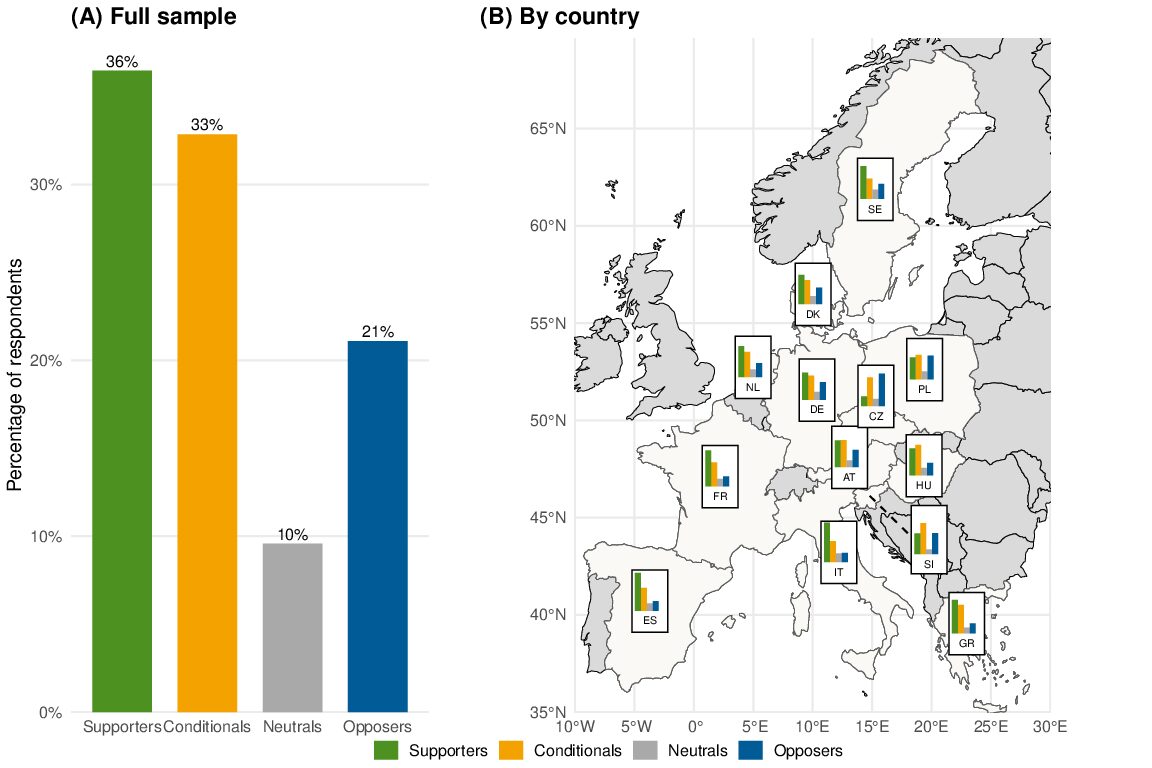
Climate policy feasibility across Europe relies on the conditional middle

Climate politics sounds increasingly polarised. But in Europe, support for climate isn’t driven by die-hard supporters or opponents.  It tends to be shaped by a large “conditional middle”  (33%). Our paper identifying the conditional middle was released today in Nature Climate Change (link). The paper was also featured in ETH News Also, an article on these finding in ETH News, as well as a blog on the CAPABLE project website. Many thanks again to all of the amazing colleagues in the Capable project!

Who really determines majority support for climate policies in Europe?

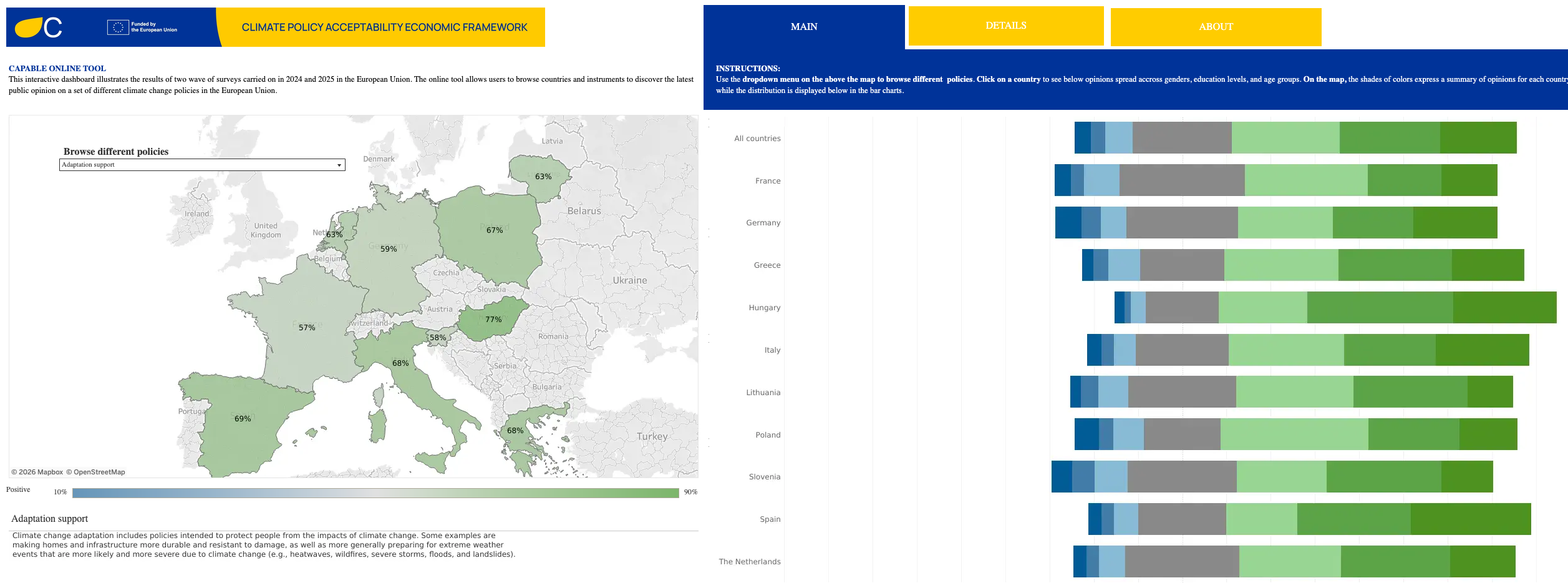
Our paper “Climate Policy Feasibility across Europe Relies on the Conditional Middle” has been accepted in principle at Nature Climate Change (pre-print). This paper identifies a crucial group of Europeans, the Conditional Middle, those who neither always in support for in opposition to climate policies, and whose views vary substantially by policy design. We estimate that the Conditional Middle constitutes about 1/3rd of citizens around Europe, and identify how preferences within this group are often the crucial determinant for whether a climate policy has majority support, or not. This paper is the flagship finding from our part of the Horizon EU-project Capable (WP2), focusing on surveys and experiments to identify European attitudes to climate change in 2025 and 2025 (survey data applet).

WU “Best Paper” awarded to “Stringent sustainability regulation”paper

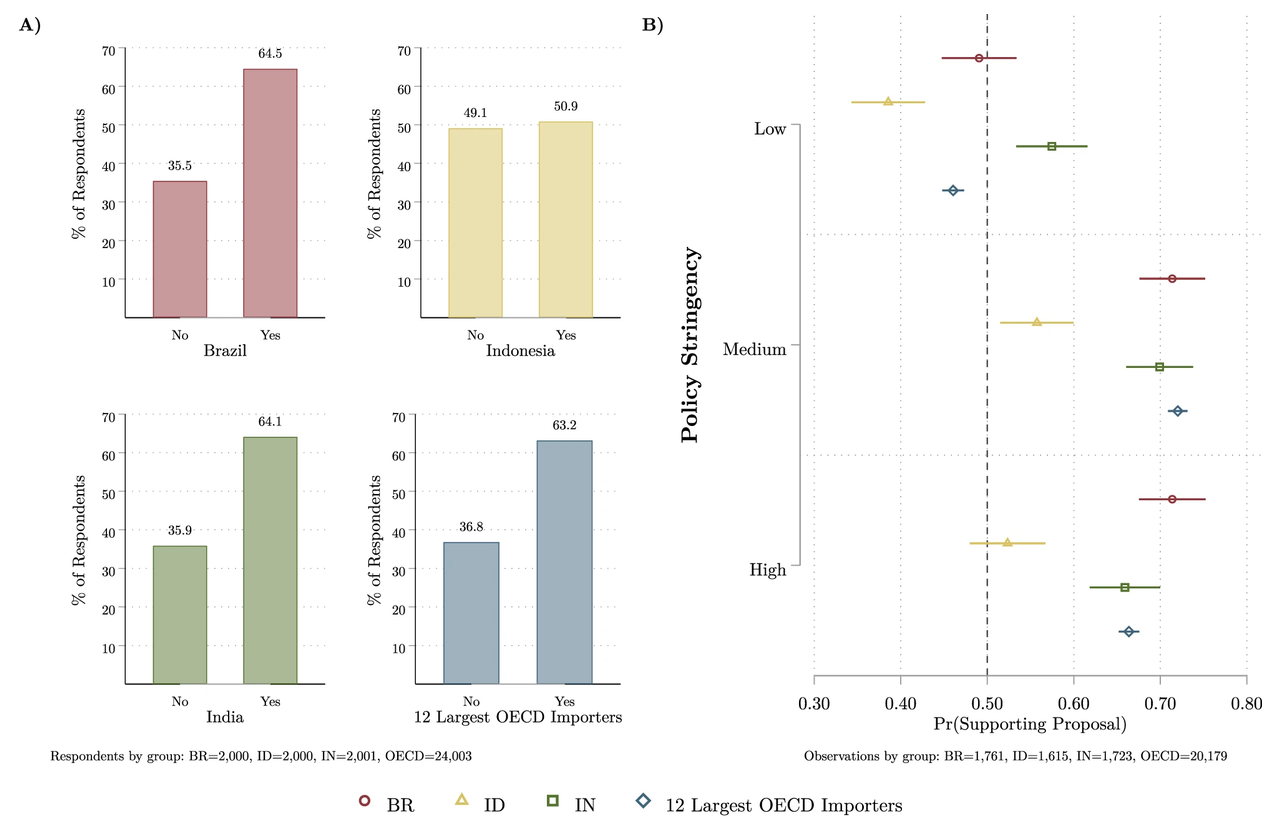
Our paper “Stringent sustainability regulations for global supply chains are supported across middle-income democracies” in Nature Communications has won the “WU Best Paper Award” awarded by the Vienna University for Economics and Business in the category “Business Communication, Legal Studies, Social Sciences, Interdisciplinary Work and Economic Geography”. Super congrats to my co-authors Dennis Kolcava and Thomas Bernauer!

What drives views on sustainable supply chain regulations?

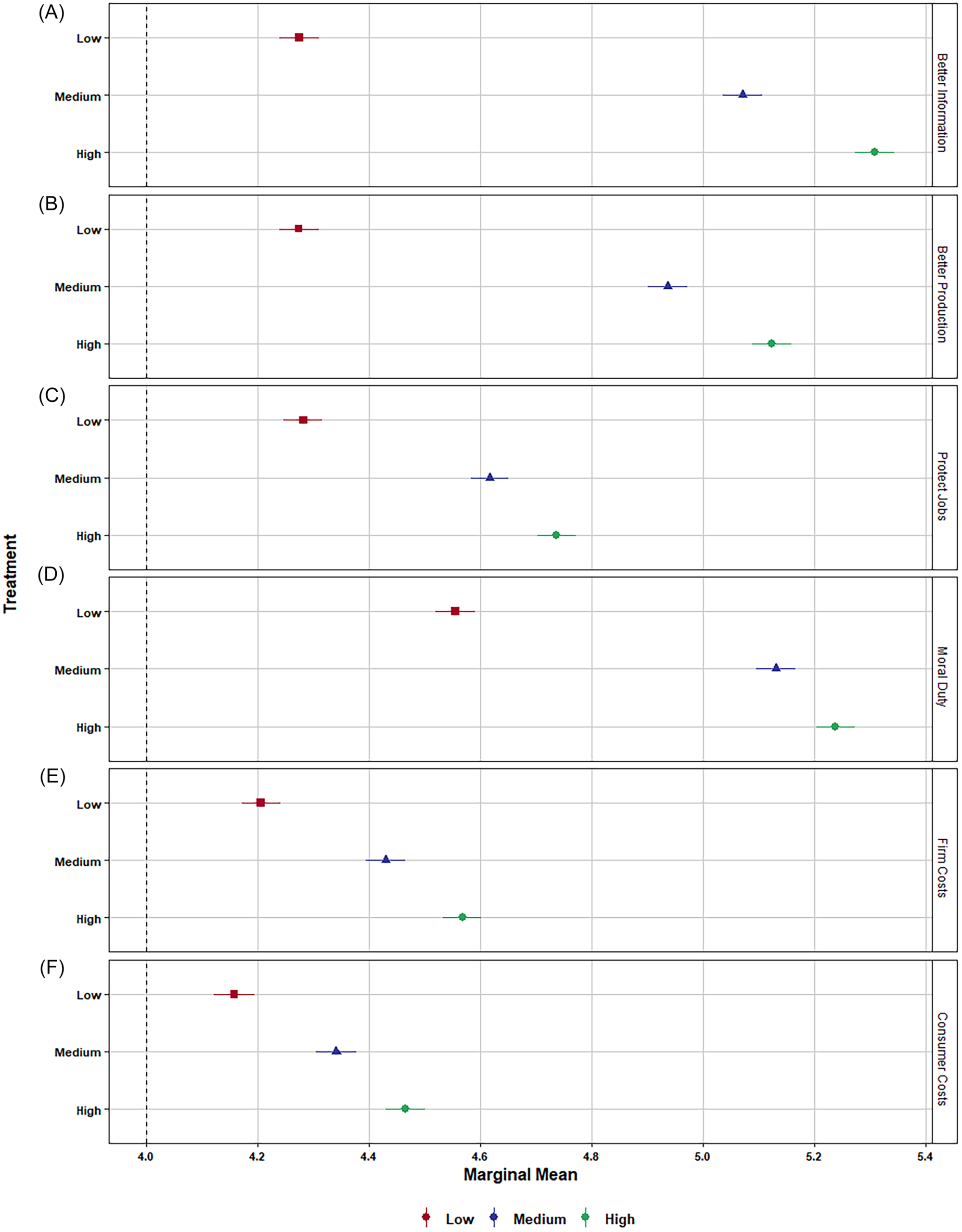
Our paper “Voter perceptions and the politics of hidden costs in unilateral sustainable supply chain regulations” was just published in the European Journal of Political Research (open access). We explore how information disclosure rules enable governments to implement market access restrictions compliant with binding trade liberalisation commitments while (a priori) obscuring their costs to voters – thus providing a potentially effective and feasible avenue towards global supply chain regulations. This is the third in a package of papers with Dennis Kolcava and Thomas Bernauer, focusing on the cross-national demand for supply chain governance across the OECD (Nature Sustainability, link), and middle-income economies (Nature Communications, open access).